Instrument assessment.
Each commission begins with a conversation about your Minilogue’s condition, your setup and how you play.
 MINILOGUE / SPEAKING SINE LANGUAGE

Bespoke instrument conversions.
The Minilogue, speaking Sine Language.
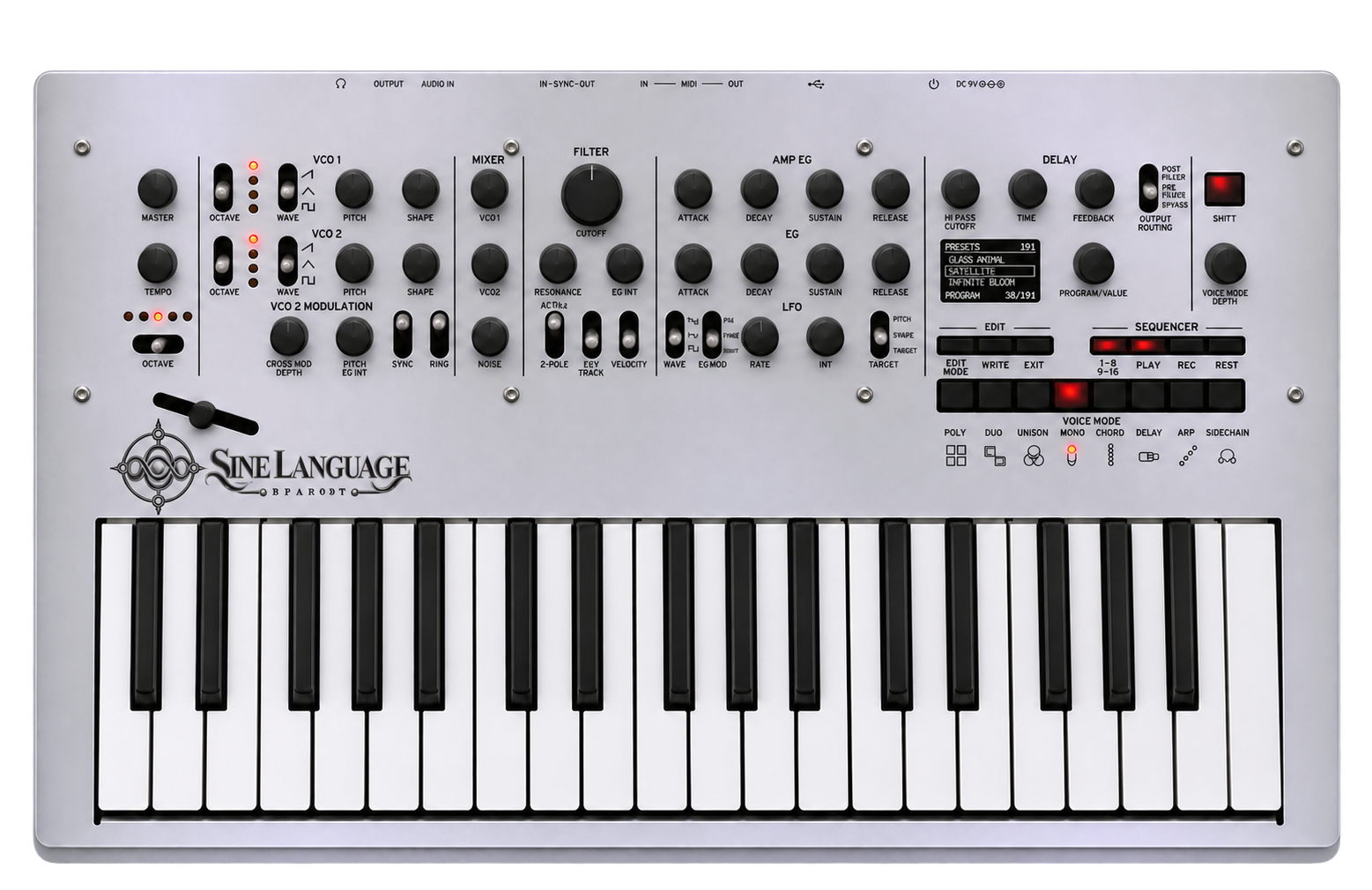
01 / BEFORE FLIGHTWORKS
I just wanted to find that feeling again.
 PARROTT + MICROKORG / 2017–2019
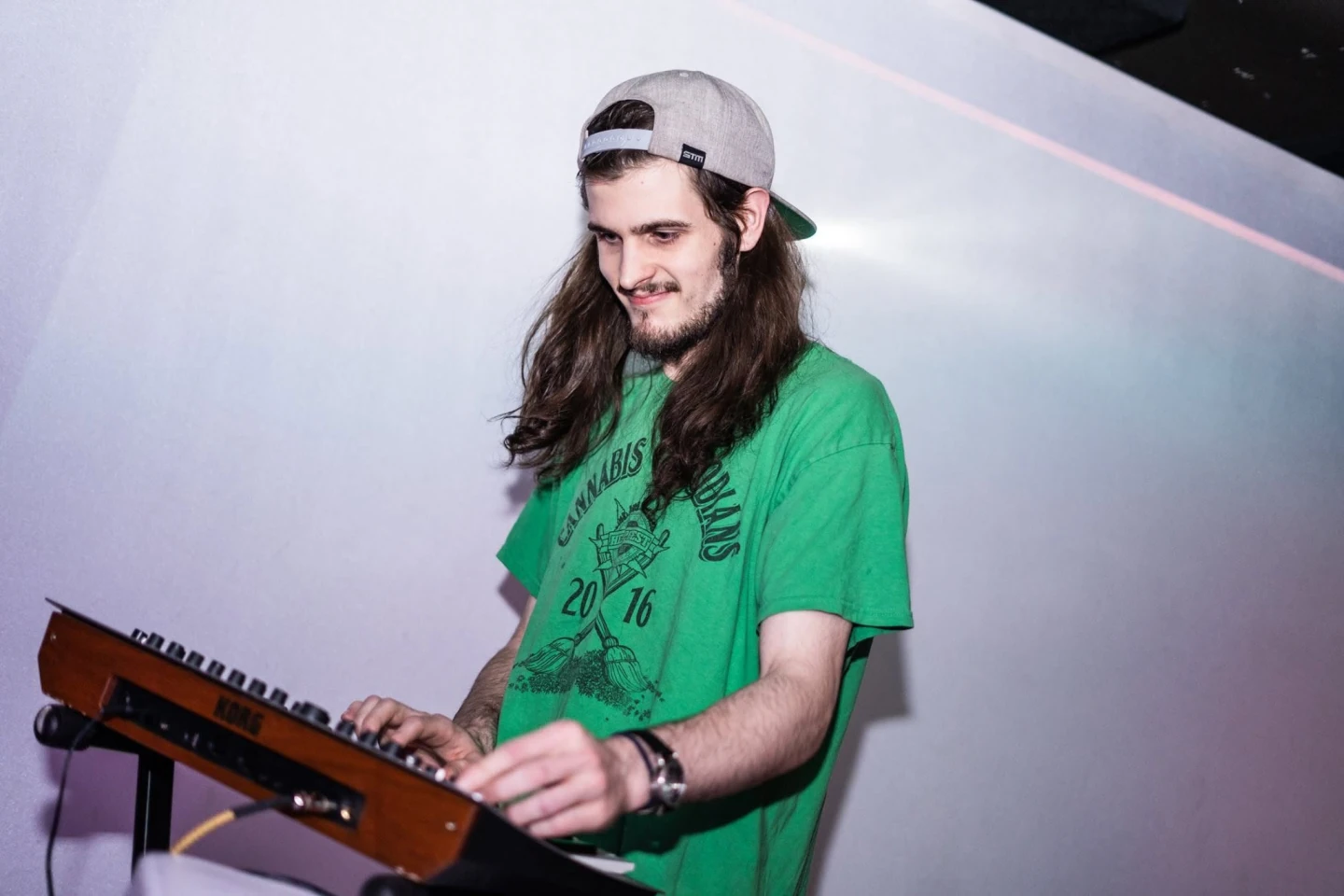
About ten years ago, Lauren bought me a microKORG for Christmas. I absolutely fell in love with it. All those beeps and boops changed the way I approached making music.
A while later, after I opened for one of my musical idols, he suggested I look into a Minilogue. My microKORG sounded too digital.
That was honestly kind of devastating. I thought I was making the coolest sounds in the world.
02 / THE SEARCH FOR ANALOG WARMTH
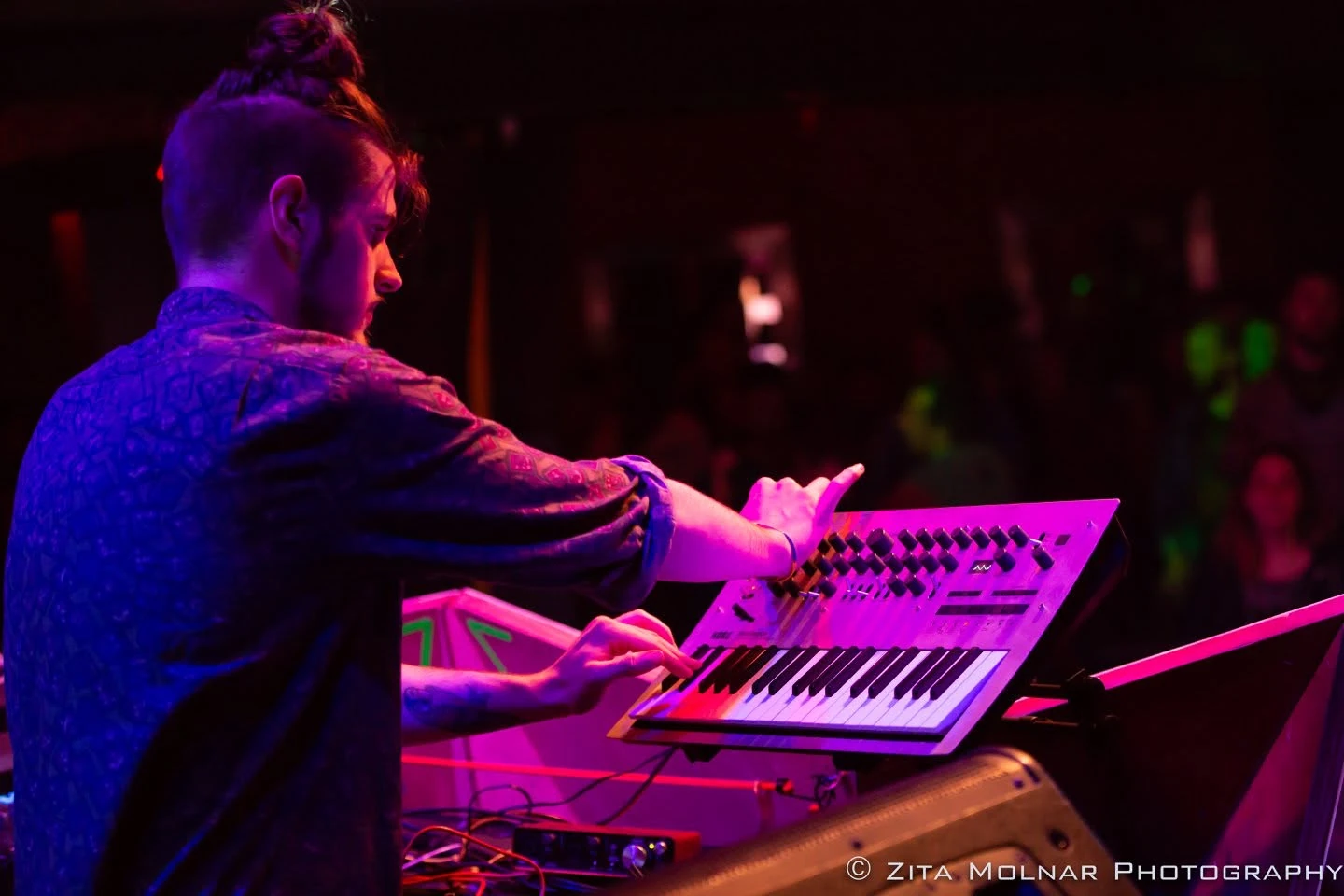
I traded my Ensoniq TS-10 on Facebook Marketplace for a Minilogue, determined to find this mysterious analog warmth everybody talked about.
It was a beautiful instrument. But I wasn’t blown away. It never gave me quite the same feeling of exploration that the microKORG had. I played it less and less. Eventually, it ended up in a closet.
03 / A DIFFERENT WAY INTO SOUND
Meanwhile, I was getting frustrated with my own sound-design workflow. Serum, Vital, Pigments: incredible synthesizers. They just weren’t clicking for me.
I kept coming back to the harmonic series. The idea that complicated, expressive sounds could emerge from simple relationships between sine waves.
I started building my own instrument in Max for Live.
I called it Sine Language.
SINE LANGUAGE / MAX FOR LIVE
It started in
Max for Live.
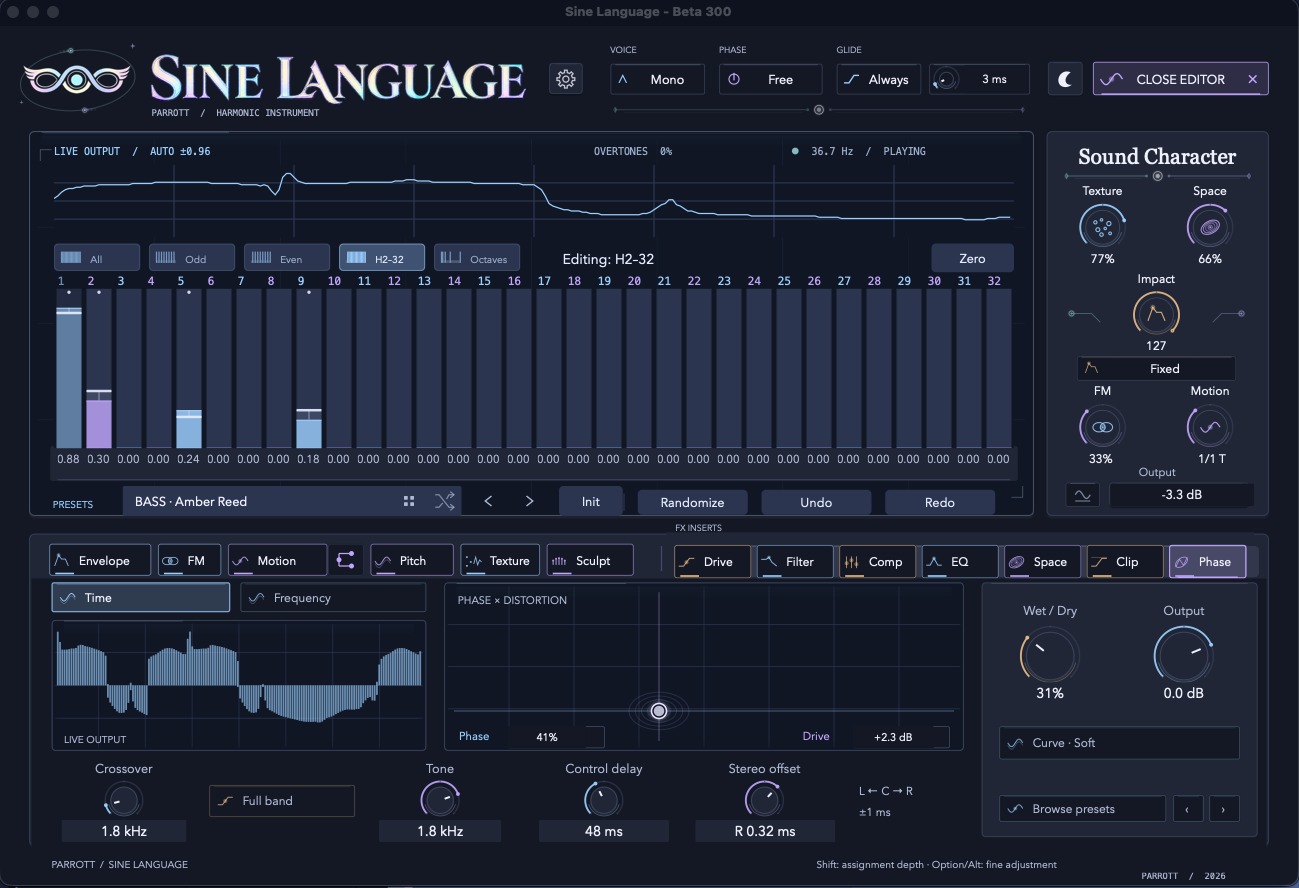

Two VCO banks. Eight components. One sound.
Shape the harmonics, then move them together.
SINE LANGUAGE / MINILOGUETwo VCO banks.
Eight oscillators.
Bloom · harmonic layout and Motion timing from the Minilogue bank.
Choose each component’s harmonic and level. A and B pair vertically. Motion uses one shared clock; the switches choose which components follow it. Drive saturates the mix.
Browser studies of the Sine Language Minilogue presets. Harmonic levels and Motion timing come from the actual bank; analog tone, effects, and motion curves differ.
04 / THE MINILOGUE EXPERIMENT
I pulled the Minilogue out of the closet to see if I could turn it into a physical version of Sine Language. That meant rewriting the synthesis, the interface, and the presets.
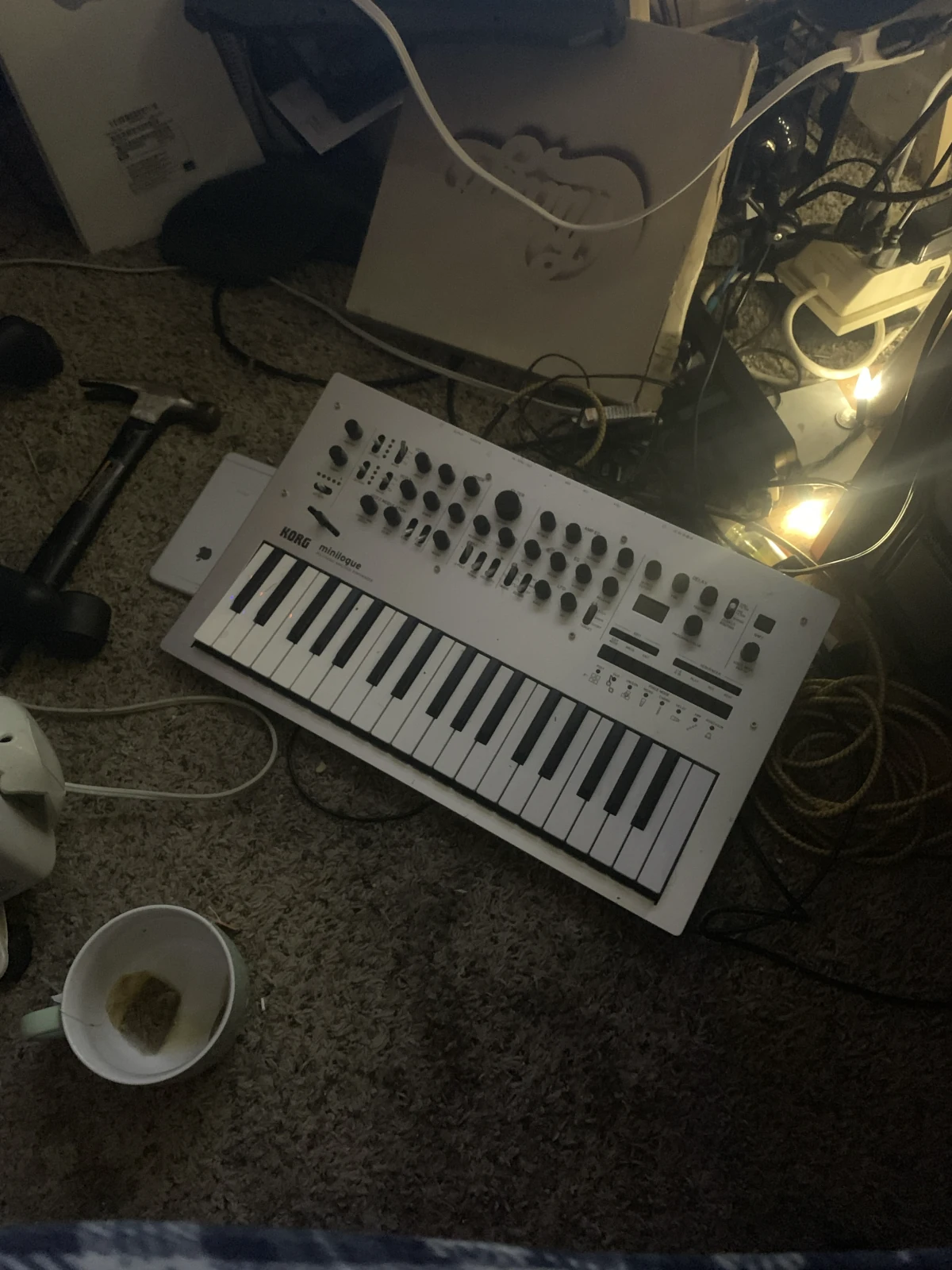
A LITTLE FORESHADOWING.
A Minilogue.
A hammer.
A tangle of cords.
An empty cup of tea.
WHAT CHANGED
Eight analog oscillators, assigned to parts of one sound.
My synthesis behavior, menus, and boot screens.
Sounds from Sine Language, adapted for the Minilogue.
BACK TO THAT FIRST FEELING
The results caught me completely off guard. Rich, organic, almost vocal. Little textures and granularities that made it feel alive. You turn a knob and it does what you expect, but somehow it still surprises you.
I shared what I’d been making. The clip took off, and people wanted to know if their Minilogue could become Sine Language too.
Howdy ho. Apparently,
we started a conversion company.
That’s Flightworks. I’ve been refining the firmware, fixing bugs, and tuning the oscillators ever since.
I didn’t commission Korg to build me a synth. But in a weird way, I finally made the instrument I would have asked them to build.
ParrottTHE MINILOGUE, RUNNING SINE LANGUAGE
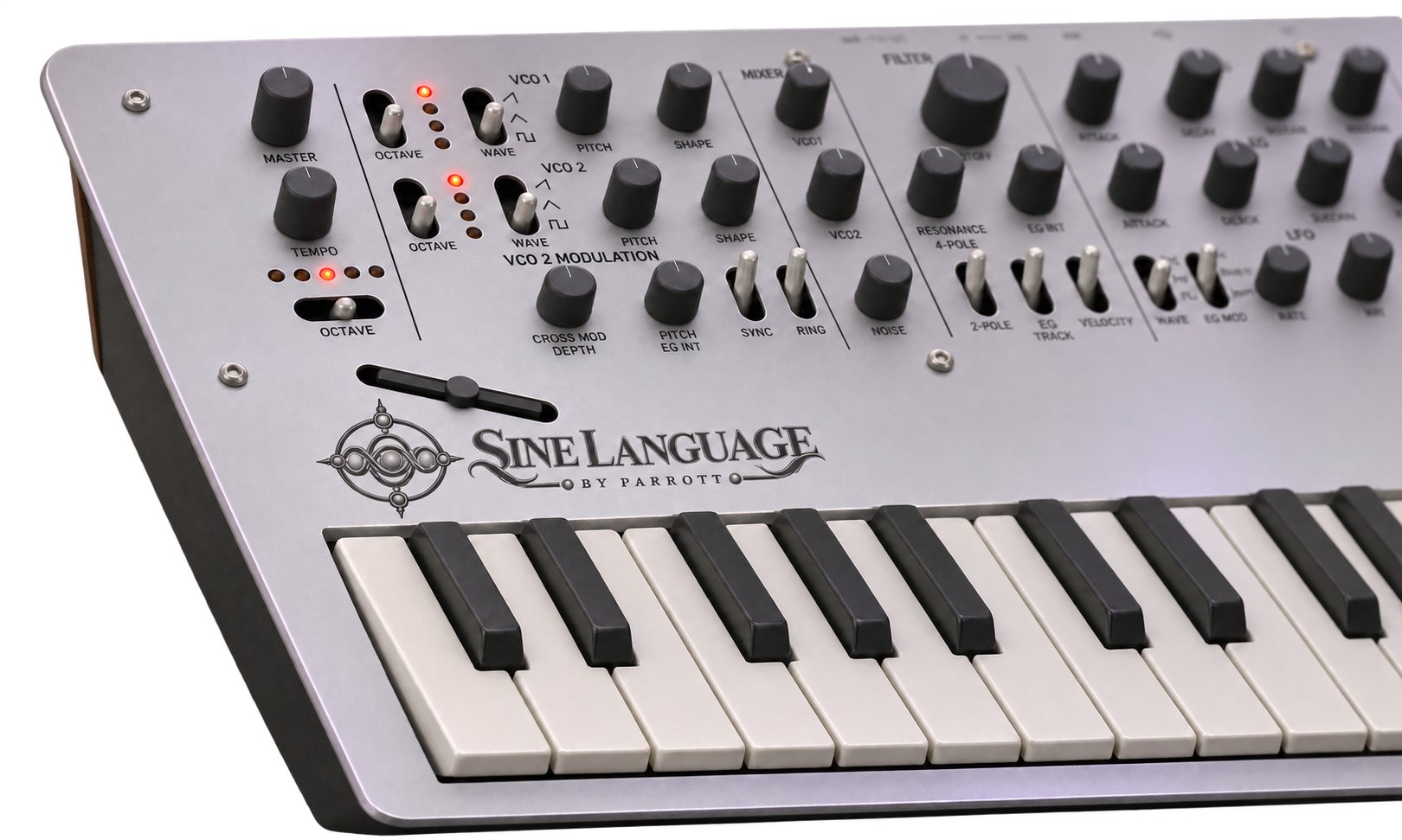
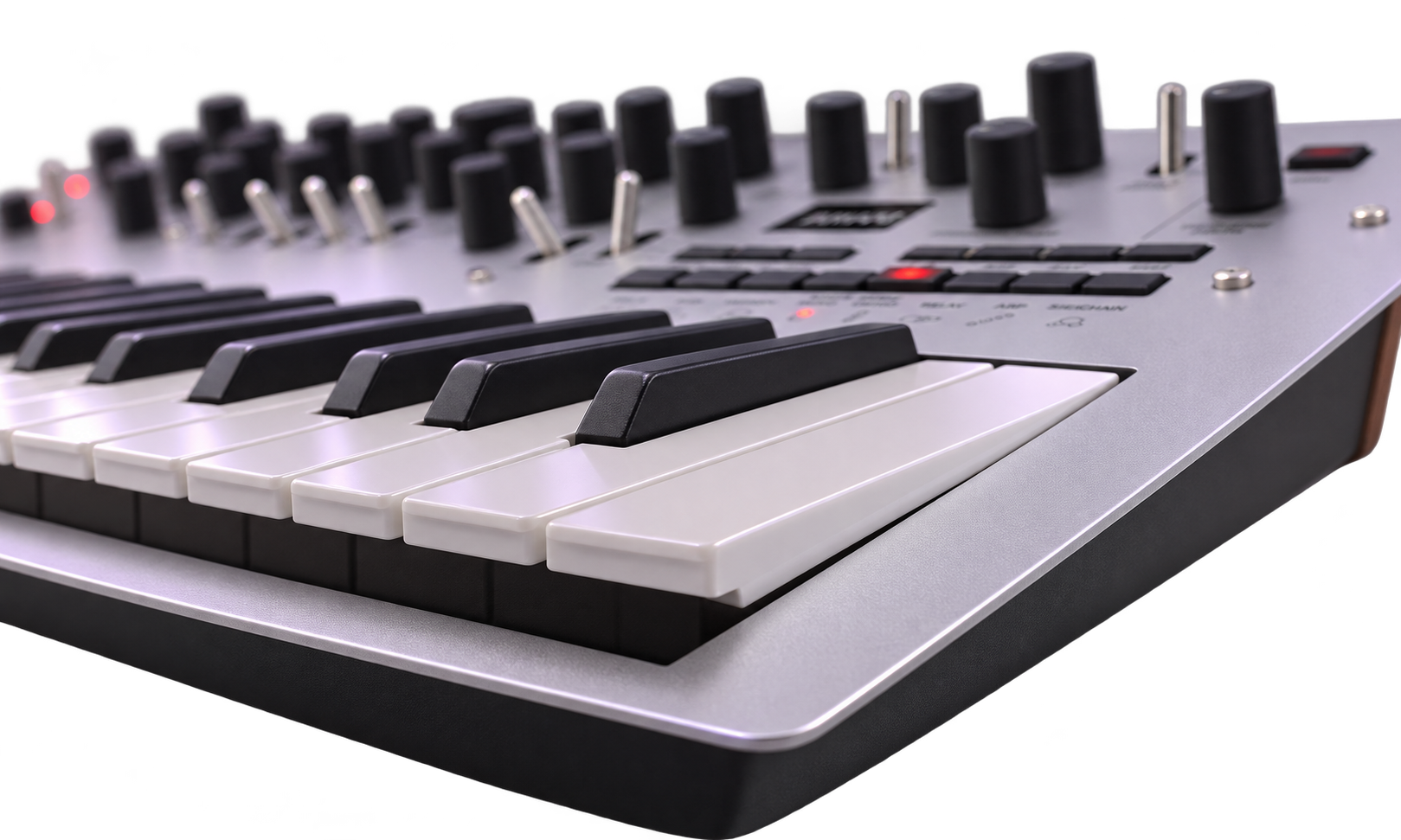
SINE LANGUAGE / FROM THE STUDIO
A recording from my studio.
05 / CONVERSIONS BY COMMISSION
I’m accepting a limited number of commissions. Each Minilogue is individually assessed, calibrated and configured. Sine Language, in the Minilogue’s own accent.
Each commission begins with a conversation about your Minilogue’s condition, your setup and how you play.
Performance options and control behavior are planned around your workflow as part of the commission.
Oscillator readings guide individual tuning. The completed instrument is checked for tuning, preset recall and control response.
CONVERSIONS
Register your interest in a Sine Language commission. I’ll follow up about your instrument and availability.
More about Parrott ↗Check your inbox for a confirmation email.